ROPE: Radio Optical Predictive Embeddings
This is my MS thesis project at NCRA-TIFR, supervised by Dr. Yogesh Wadadekar in collaboration with Omkar Bait (NRAO / CosmicAI), focused on aligning optical and radio observations of galaxies in a shared embedding space.
Galaxies emit radiation across a broad range of frequencies, from radio to optical, and the physical processes behind each differ. As a result, the same galaxy can look drastically different depending on the observing frequency, which makes cross-matching sources across bands with traditional positional methods (e.g. nearest-neighbor matching) difficult.
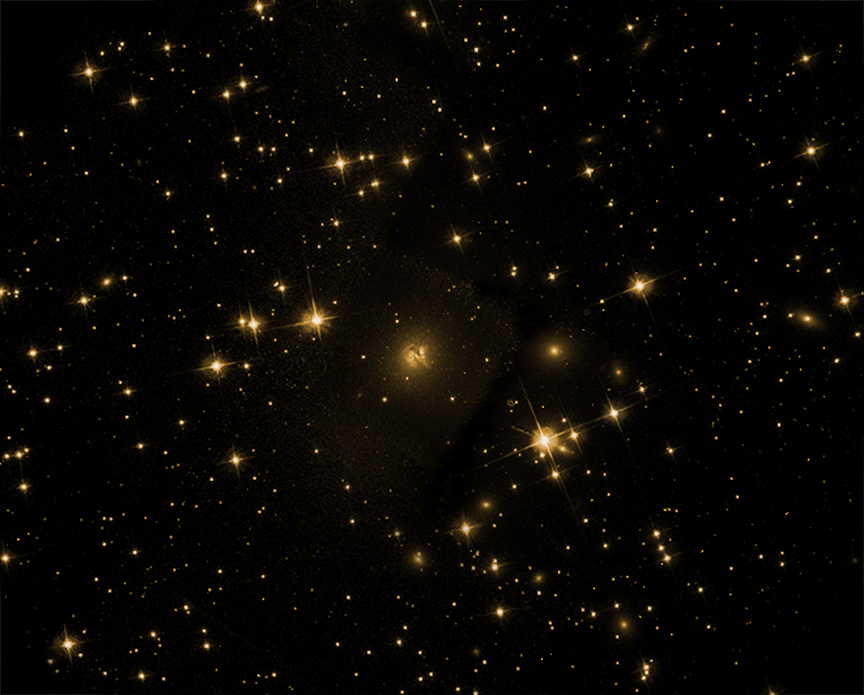
Credit: NASA/STScI
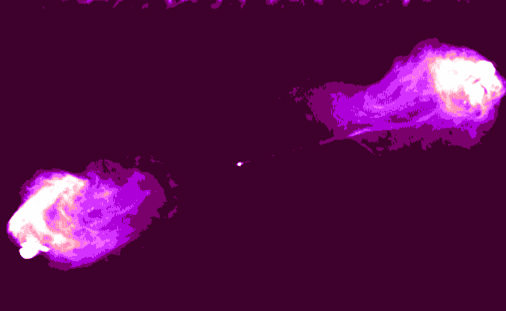
Credit: NRAO/AUI
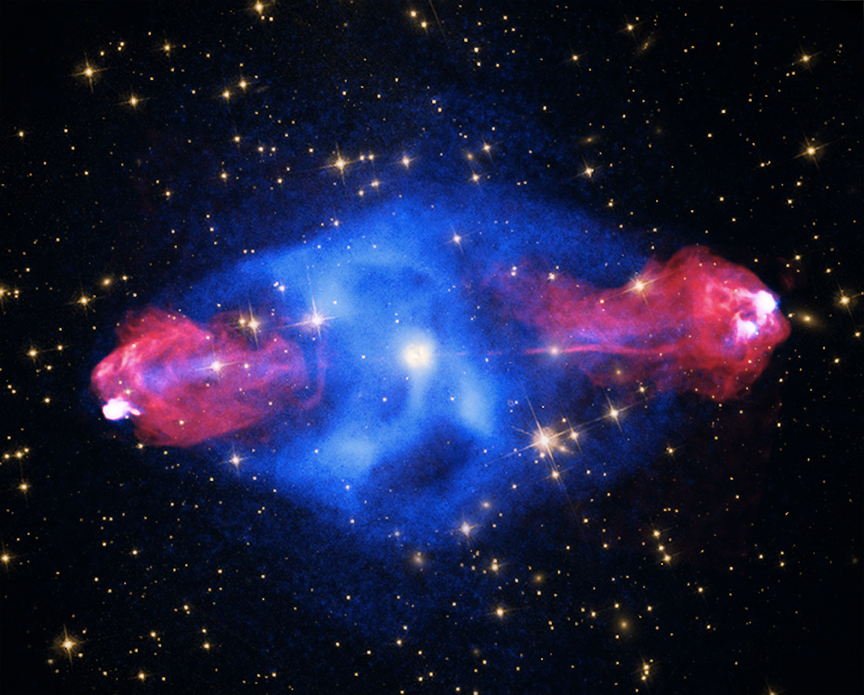
Credit: X-ray: NASA/CXC/SAO; Optical: NASA/STScI; Radio: NSF/NRAO/AUI/VLA
Recent machine learning approaches try to automate this, but usually fall back on simple catalog measurements like brightness or size rather than the actual visual shapes, or require large annotated datasets that are impractical to collect at scale. This motivates a self-supervised, spatially-aware approach that learns directly from the images themselves.
The goal is to build ROPE (Radio Optical Predictive Embeddings), using a self-supervised JEPA (Joint Embedding Predictive Architecture) based approach. Once trained, the resulting embeddings could enable cross-band source matching, similarity search, and even surfacing new classes of astronomical sources as outliers in the embedding space.
Status: in progress - full write-up, code, and model weights to follow once results are public.